

- Parking
- Boat access only
- Typical crowd
- Usually quiet
- Best for
- History, Snorkelling the ruins, Shelling, Wildlife
- Facilities
- Very limited. No concessions. Bring water, food and shade.
Egmont Key sits in the mouth of Tampa Bay and is both a state park and a national wildlife refuge. There is no bridge. The ferry from Fort De Soto is the usual way in.
The island has a long and uncomfortable history. It held Seminole prisoners before their forced removal west, served as a Union base during the Civil War, and was fortified as Fort Dade around the Spanish-American War. The remains of the fort's brick streets and gun batteries are still there, some of them now in the water.
The lighthouse, first lit in the 1850s and rebuilt in 1858, still operates.
What makes it worth the trip
The lighthouse
Operating since the nineteenth century and still an active aid to navigation.
Fort Dade underwater
Erosion has taken part of the old fort into the Gulf. Sections of brick road and battery now sit in shallow water, snorkellable on a calm day.
Gopher tortoises
The island supports a substantial population, protected and easy to see.
Parking
None. Ferry from Fort De Soto Park or private boat. Pay for parking at Fort De Soto, then the ferry separately.
Rates and hours change. Confirm the current cost with the city, the county or the state park before you go rather than trusting any published figure, including ours.
Crowds
Limited by boat access. Busiest midday in summer when the sandbar draws anchored boats.
Rules
- Much of the island is a national wildlife refuge with restricted areas. Observe the closures.
- Do not remove artefacts. The ruins are protected.
- No facilities means no water. Bring more than you think you need.
- Glass is banned on every beach in the county. Cans and plastic only.
- Sea turtle nesting runs 1 May to 31 October. Fill in holes, knock down sandcastles, take gear home at night and keep lights off the sand after dark.
- Shorebird nesting areas are roped off in spring and summer. The nests sit on open sand and are nearly invisible, so stay outside the posted zones.
- Beach warning flags are not advisory decoration. Double red means the water is closed. Purple means dangerous marine life, usually jellyfish or red tide.
- Most beach towns clear unattended chairs, tents and umbrellas overnight. Take it with you.
Getting there
Seasonal ferry from Fort De Soto Park, or your own boat. Crossings are weather dependent.
Good for
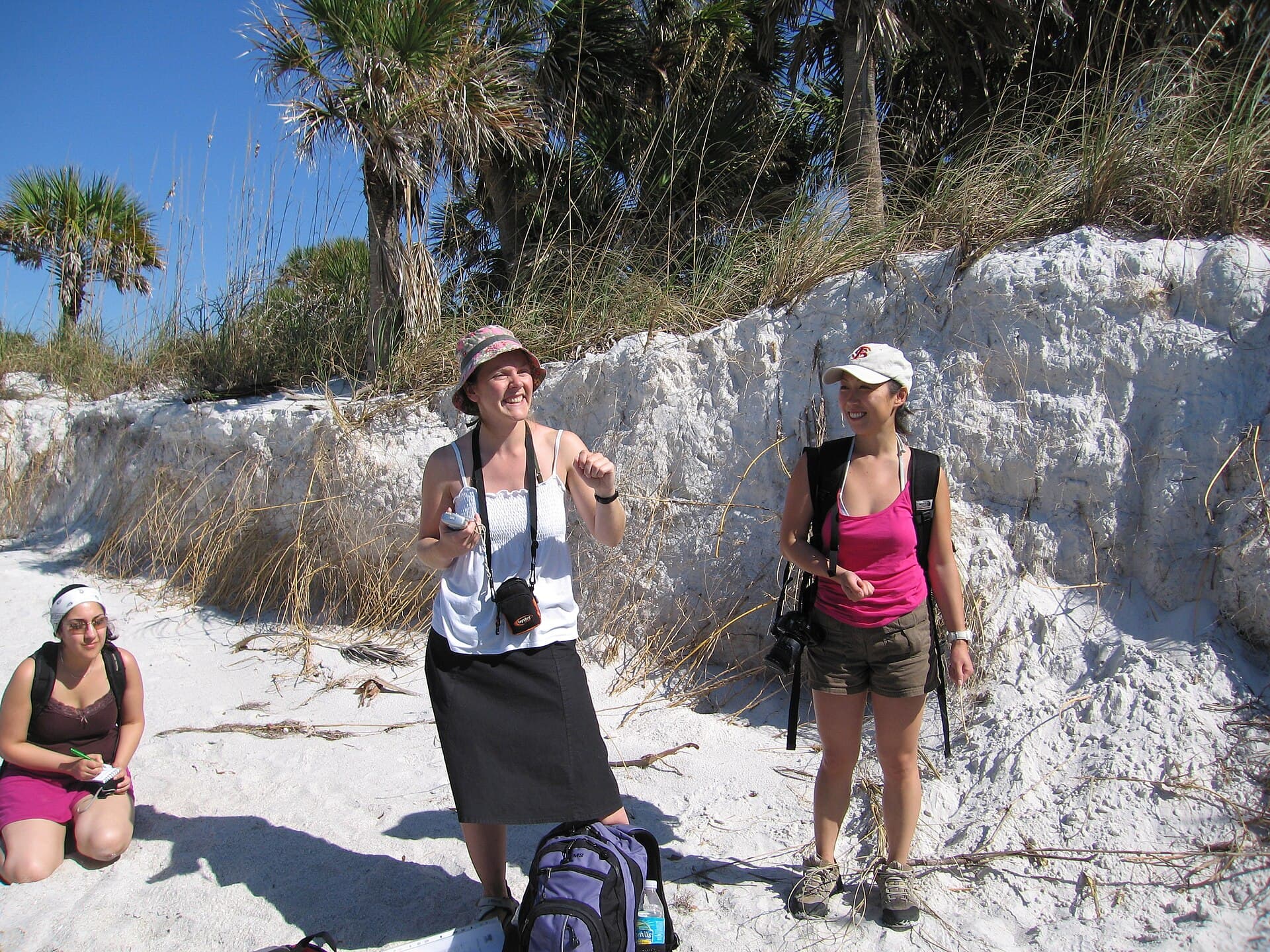
Photo: Tom Corser / Wikimedia Commons (CC BY-SA 2.0 uk). Source