

- Parking
- Park entry fee
- Typical crowd
- Busy
- Best for
- Dogs, Shelling, Nature trails, Birdwatching
- Facilities
- Restrooms, Showers, Cafe, Nature centre, Beach chair and kayak rental
Honeymoon Island is a barrier island state park at the end of the Dunedin Causeway, and it manages to be several different beaches at once. The main swimming beaches face west. The north end has a slash pine forest with an osprey trail through it. The south end has the dog beach.
The name comes from a 1940s promotion that offered honeymooning couples a stay in thatched bungalows on the island. The bungalows are long gone. The name stuck.
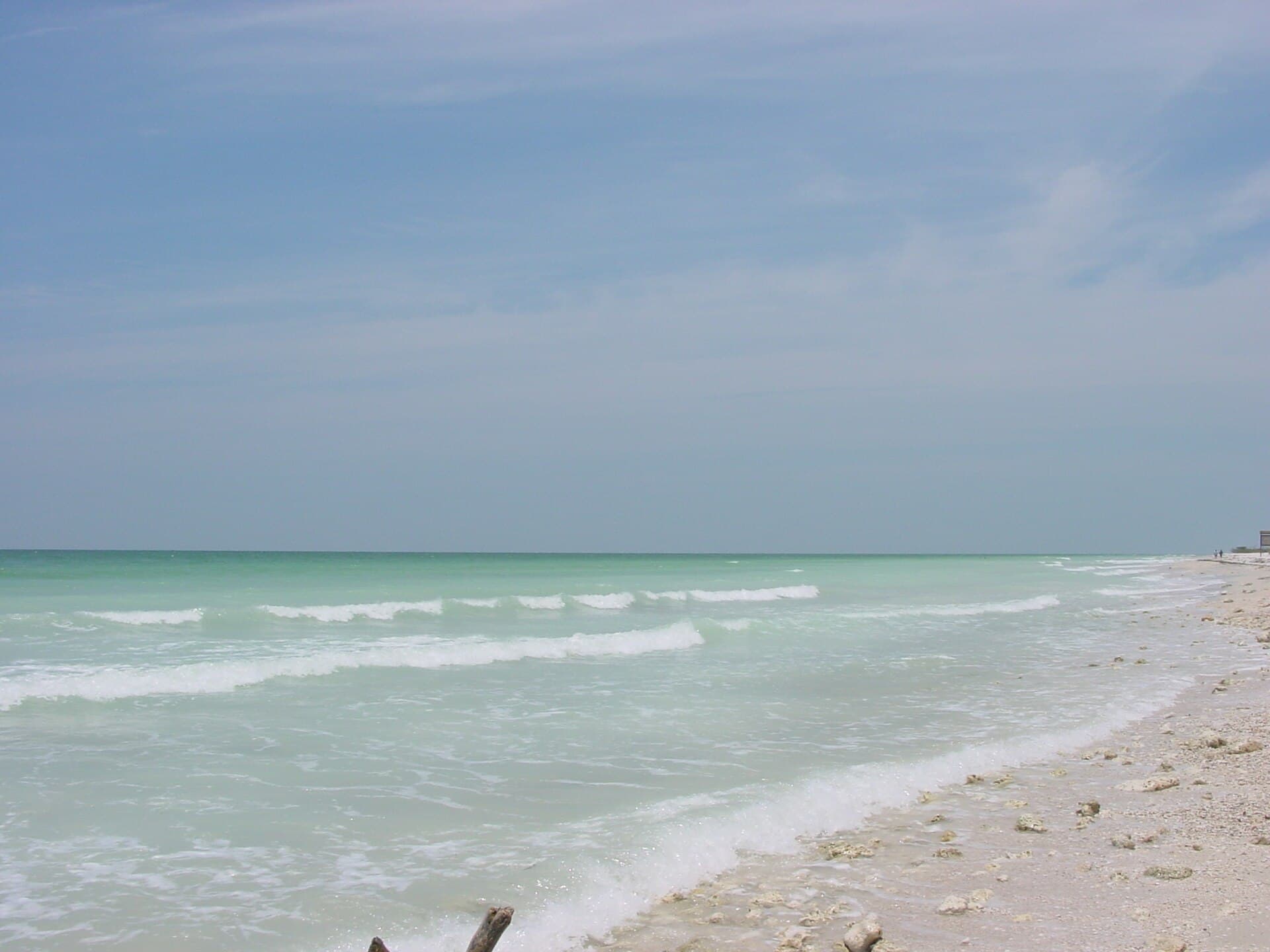
Shelling here is better than on the developed beaches to the south, because there is no raking and no seawall interrupting what the Gulf deposits.
What makes it worth the trip
The dog beach
A designated stretch at the southern end where dogs are welcome on leash, in the water included. One of very few places in Pinellas where that is true.
The osprey trail
A three mile loop through one of the last remaining stands of virgin slash pine in South Florida, with an unusually dense osprey population nesting overhead.
Shelling
The north beach in particular collects shells and sand dollars, and the further you walk the better it gets.
Parking
State park entry fee per vehicle. Large lots along the beach, but the park reaches capacity on hot weekends and holidays and closes the gate until spaces free up.
Rates and hours change. Confirm the current cost with the city, the county or the state park before you go rather than trusting any published figure, including ours.
Crowds
One of the busiest state parks in Florida. Weekday mornings are calm; summer weekends can hit capacity before midday.
Rules
- Dogs only in the designated dog beach and on the pet-friendly trails, on a leash no longer than six feet.
- Alcohol is not permitted.
- Collecting live shells is prohibited. If something is still in it, put it back.
- Glass is banned on every beach in the county. Cans and plastic only.
- Sea turtle nesting runs 1 May to 31 October. Fill in holes, knock down sandcastles, take gear home at night and keep lights off the sand after dark.
- Shorebird nesting areas are roped off in spring and summer. The nests sit on open sand and are nearly invisible, so stay outside the posted zones.
- Beach warning flags are not advisory decoration. Double red means the water is closed. Purple means dangerous marine life, usually jellyfish or red tide.
- Most beach towns clear unattended chairs, tents and umbrellas overnight. Take it with you.
Getting there
West on Curlew Road through Dunedin and over the causeway. The causeway itself has free roadside parking and water on both sides if the park is full.
Good for
Photo: Christopher Hollis / Wikimedia Commons (Public domain). Source